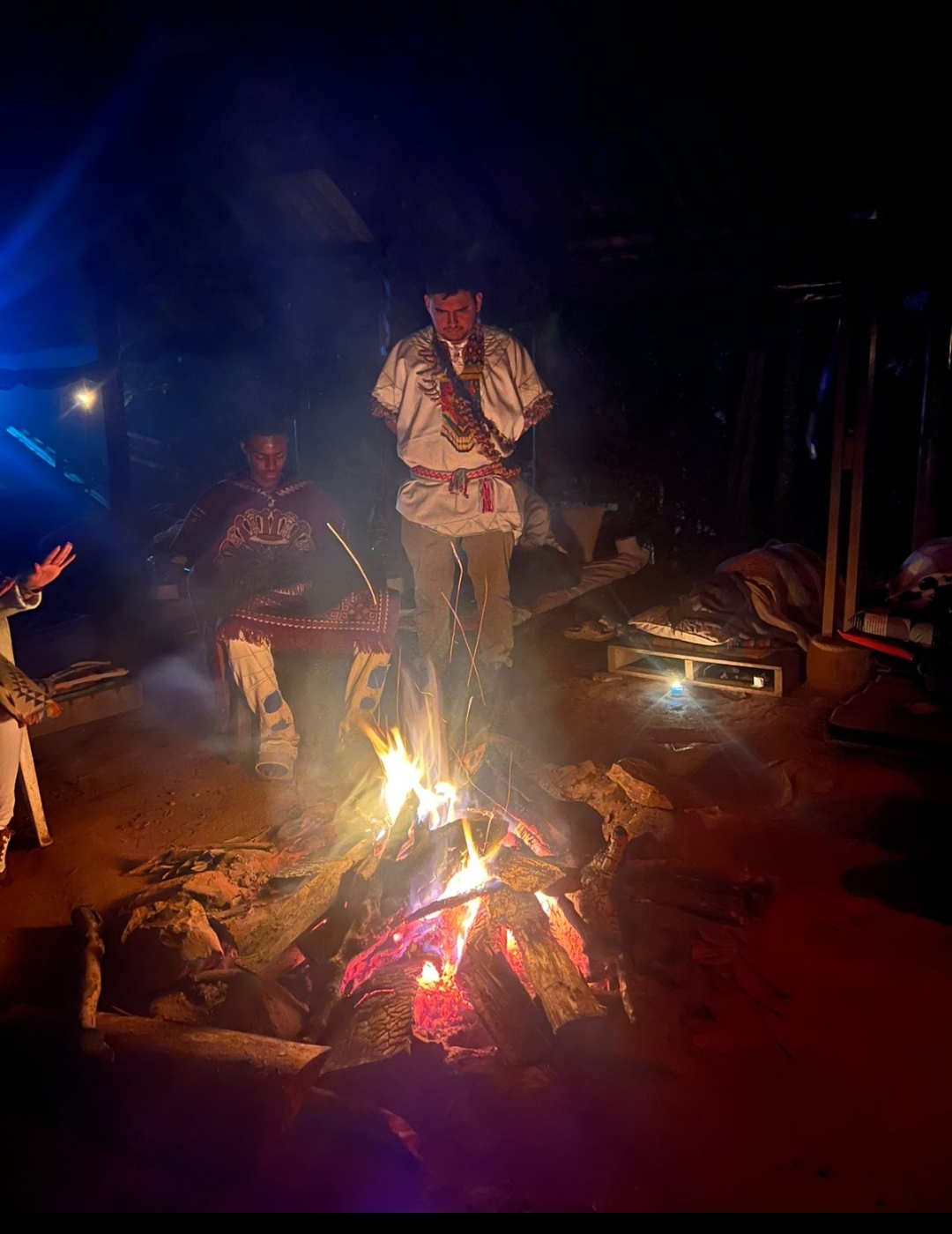
Ayahuasca Ceremony in Colombia
Tradition, Yagé, and What to Expect
Our Ayahuasca ceremony in Colombia is a deeply meaningful experience connected to Indigenous traditions, particularly those of the Los Pastos community, ancestral knowledge, and spiritual reflection. In Colombia, ayahuasca is commonly known as Yagé, particularly in regions such as Putumayo, where different Indigenous communities have preserved ceremonial practices for generations.
A traditional ceremony is not simply an activity or a tourist experience. It is a sacred gathering guided by an experienced Taita with more than 38 years of ceremonial experience, who leads participants through the ceremony with respect, discipline, traditional songs, prayers, and ancestral knowledge.
At Psychotravels, we hold authentic ceremonies that are approached with respect for the tradition, careful preparation, responsible guidance, and a sincere intention for personal reflection.
Are you ready to enjoy your ceremony ?
book here
What Is an Ayahuasca Ceremony in Colombia?
An Ayahuasca ceremony is a traditional gathering in which participants drink a preparation known in Colombia as Yagé, (Ayahuasca+chakruna), The ceremony is guided by a Taita .
The experience may involve periods of silence, songs icaros, introspection, emotional release, changes in perception, symbolic imagery, and deep personal reflection. Every participant experiences the ceremony differently, and here they have emotional, spiritual, or psychological changes.
The purpose of our traditional ceremony is not entertainment. It is approached as a moment of connection, reflection, and respect for ancestral knowledge.
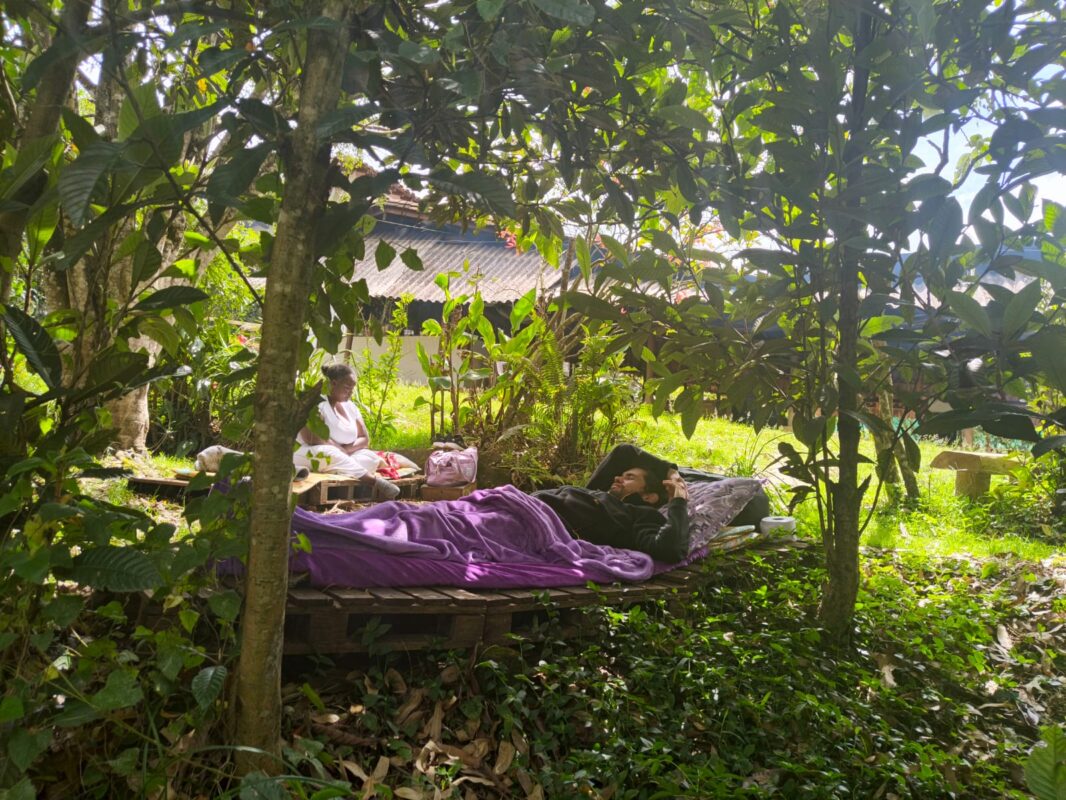
Ayahuasca and Yagé: Are They the Same?
The words Ayahuasca and Yagé are often used to describe similar traditional plant preparations, but the terminology can vary according to the region, community, and cultural tradition.
Always keeping in mind that Yagé is the combination of Ayahuasca and Chacruna. These two plants are always necessary to have the full experience.
In Colombia, the word Yagé is especially common among Indigenous communities in the Amazonian regions, including Putumayo. The preparation, ceremonial songs, rituals, and methods of guidance may differ between traditions and individual practitioners.
For this reason, it is important to understand that there is not only one universal way to conduct an ayahuasca ceremony. Each community may have its own teachings, language, rituals, and ceremonial practices.
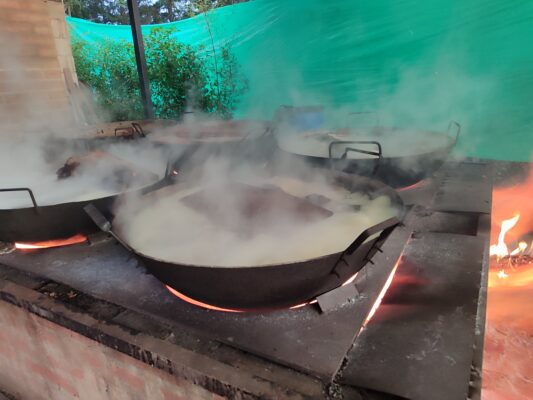
The Indigenous Tradition Behind Yagé in Colombia
The Role of our Taita
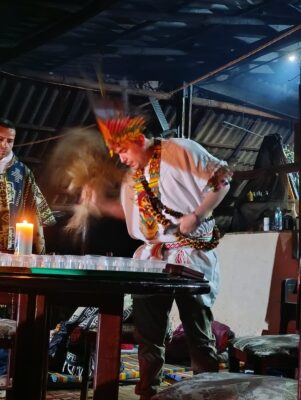
The Taita ( shaman ) is the traditional spiritual guide who leads the ceremony. In many Colombian Indigenous traditions, the Taita’s role is connected to years of learning, observation, discipline, community knowledge, and ceremonial practice.
During a ceremony, the Taita may use traditional songs, known as ícaros, prayers, ritual instruments, and other forms of ancestral guidance.
A responsible Taita should explain the ceremony clearly, establish appropriate boundaries, and pay attention to the physical and emotional well-being of participants.
At our retreat, our Taita has more than 38 years of experience working with the medicine, all in this same sacred place.
Putumayo and the Yagé Tradition
Putumayo is one of the Colombian regions most strongly associated with traditional Yagé practices. Its Indigenous communities have preserved knowledge related to medicinal plants, ceremonial spaces, songs, rituals, and spiritual teachings.
For many communities, Yagé is not merely a substance. It forms part of a broader cultural and spiritual tradition connected to the land, family, community, and ancestral knowledge.
At our retreat, our Taita learned his ancestral knowledge and ceremonial tradition within the Los Pastos community of Putumayo.
Traditional Knowledge and Cultural Respect
Participating in our ceremony requires respect for the people, traditions, and communities who preserve this knowledge.
Participants should avoid treating the experience as a challenge, competition, or form of entertainment or a touristic activity. It is also important to listen to the guidance of the ceremonial team, respect the sacred space, and understand that different traditions may follow different practices.

The Traditional Maloka
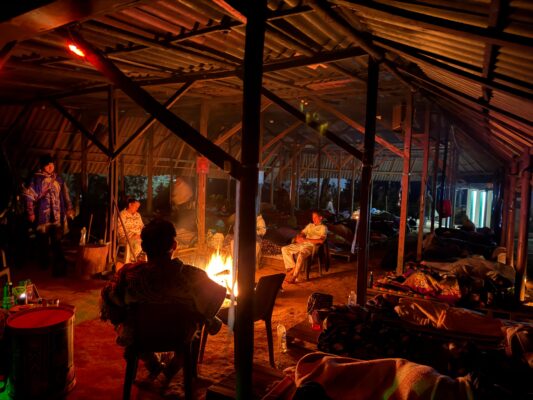
Our Maloca is a traditional ceremonial structure used by several Indigenous communities in the Amazon and surrounding regions.
This Maloca may serve as a place for ceremonies, gatherings, teachings, community activities, and spiritual work. Its design and meaning vary between Indigenous peoples.
In a traditional ceremony, the Maloca is treated as a sacred space. Participants are expected to maintain respect, follow the instructions of the ceremonial team, and help preserve a calm and considerate environment.

The Ceremony
Before the ceremony, our Taita will give you an introduction to the experience. Afterward, you will receive a 35 cc cup of the medicine at 9:00 a.m. You may then receive a second cup at 1:00 p.m., after which the ceremony will continue until approximately 5:00 or 6:00 p.m. after this will start our integration process
Traditional Songs and Guidance
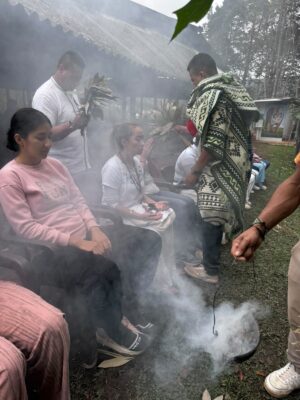
Traditional songs, including ícaros, may be used during the ceremony. Depending on the tradition, the Taita may also offer individual guidance or perform traditional cleansing practices.
Reflection and Integration
After the main part of the ceremony, our participants are given time to rest, reflect, and gradually return to ordinary activities.
Integration is an important part of the experience. Participants may benefit from journaling, quiet reflection, speaking with a trusted person, or considering how the experience relates to their everyday life.
What Can You Expect From our Ayahuasca Ceremony?
Every person responds differently. Some participants describe experiences involving:
- Deep introspection
- Emotional release
- Personal memories
- Changes in perception
- Symbolic imagery
- A sense of connection with nature and all
- Anwers about personal values or life direction
- Periods of silence and contemplation, understanding.
An ayahuasca ceremony does not guarantee that the experience will be pleasant or easy. Participants should approach it with realistic expectations and understand that the experience can be physically and emotionally demanding. This is because the medicine is often described as a “mirror of your consciousness,” and for this reason, you may sometimes have to confront what you perceive as your own inner “demons” or unresolved aspects of yourself.
How to Prepare for an Ayahuasca Ceremony in Colombia?
Preparation should begin before arriving at the ceremonial location. at least 1 week before.
Diet and Lifestyle Preparation
We recommend beginning a simple diet four days before the ceremony. During this period, it is recommended to avoid dairy products, red meat, fast food, highly seasoned foods, processed meats, and heavily prepared meals.
In the days leading up to the ceremony, you may eat fish, chicken, salads, and fruits.
It is also important to avoid alcohol, cannabis, and recreational drugs. Please inform our team about any medications you are currently taking and any current medical conditions you may have.
Medications and Health Information
Before participating, every person should disclose to our team relevant health conditions, previous medical history, and all medications or supplements they use.
Some medications and health conditions may create serious risks when combined with ayahuasca. Participants should obtain appropriate medical advice before deciding whether to participate.
Do not stop or change prescribed medication with.out consulting our medical team.
What to Bring
Depending on the location and the instructions provided, participants may wish to bring:
- Comfortable clothing
- Warm layers
- Personal hygiene items
- A water bottle
- Insect repellent
- Necessary personal medication
- A notebook for reflection ( agenda )
- An specific pourpouse ( intention )
- sunscreen
Setting Your Intention
Some participants find it useful to reflect on why they are considering the ceremony.
An intention may relate to personal reflection, emotional understanding, spiritual questions, or a desire to reconnect with oneself. However, it is important to remain flexible and avoid demanding a specific result from the experience.
What to Know Before Your Ceremony
Before participating, make sure you understand:
- Who will guide the ceremony
- Where the ceremony will take place
- What preparation is required
- What support will be available
- How emergencies are handled
- What health information must be disclosed
- What the schedule includes
- What is expected from participants
A clear explanation before the ceremony is an important part of responsible preparation.
How to Choose an Authentic Ayahuasca Ceremony in Colombia
When considering a ceremony, do not focus only on photographs, prices, or promises of extraordinary experiences.
Consider the following questions:
Who Leads the Ceremony?
Ask about the Taita or traditional practitioner, their background, their community, and their ceremonial experience.
Is the Tradition Clearly Explained?
A responsible retreat should explain the cultural background of its ceremony without making exaggerated claims or presenting Indigenous traditions as entertainment.
Is Participant Safety Taken Seriously?
The organizers should ask about health conditions, medications, allergies, and relevant personal information before participation.
Are the Groups Small Enough for Proper Attention?
Smaller groups may make it easier for the ceremonial team to provide guidance and observe participants throughout the experience.
Is the Ceremonial Space Respectfully Maintained?
The location should provide a calm environment where the tradition and the participants are treated with respect.
Are Expectations Communicated Clearly?
A trustworthy organization should explain the schedule, preparation, accommodation, transportation, costs, and limitations before the participant makes a decision.
Our Traditional Ayahuasca Ceremony Near Medellín
Psychotravels offers a traditional ayahuasca retreat in the Colombian Andes, approximately one hour from Medellín, in the Guarne area.
Our work is connected to an Indigenous Taita from the Putumayo and Pastos tradition, with more than 38 years of ceremonial experience. The ceremonies take place in a traditional Maloca and are held in a peaceful mountain environment.
We work with small groups and place importance on personal attention, respectful guidance, preparation, and the preservation of a family-oriented ceremonial atmosphere.
Our intention is to offer an experience connected to tradition rather than a commercial or mass-tourism model.
Why Choose Our Ceremony?
Participants choose our ceremony because of our focus on:
- Indigenous Taita guidance
- Putumayo and Pastos tradition
- More than 38 years of ceremonial experience
- A traditional Maloca
- Small-group ceremonies
- A peaceful location in the Colombian Andes
- Personal guidance and support
- Respect for traditional ceremonial practices
- Preparation and health-information review
- A family-oriented environment
Every participant is encouraged to approach the experience with respect, honesty, and realistic expectations.
Frequently Asked Questions
Is Ayahuasca the Same as Yagé?
The terms are often used for similar traditional preparations, but the name and ceremonial practices vary between regions and Indigenous traditions. In Colombia, Yagé is a commonly used term, especially in Putumayo.
Where Are Ayahuasca Ceremonies Held in Colombia?
Ceremonies are held in different regions of Colombia, including areas connected to Amazonian and Indigenous traditions. Putumayo is particularly associated with traditional Yagé practices.
What Is a Traditional Ayahuasca Ceremony?
A traditional ceremony is a guided gathering connected to Indigenous knowledge, ritual, songs, spiritual practices, and respect for the ceremonial preparation.
What Is a Maloca?
A Maloca is a traditional structure used by several Indigenous communities for ceremonies, gatherings, teachings, and community activities.
What Should I Consider Before Participating?
You should understand the tradition, the guide’s experience, the ceremony’s setting, the preparation requirements, available support, and any possible health risks.
How Should I Prepare?
Follow the instructions provided by the ceremonial team, communicate all relevant health information and medications, avoid alcohol and recreational substances, rest properly, and arrive with realistic expectations.
How Can I Choose a Responsible Ceremony?
Look for clear information, experienced guidance, health screening, respectful treatment of Indigenous traditions, small groups, transparent costs, and clear communication before the ceremony.
Where Can I Experience a Ceremony Near Medellín?
Psychotravels offers traditional ayahuasca ceremonies in the Colombian Andes near Medellín. You can learn more about the location, retreat structure, preparation, and available experiences on our retreat page.
Experience a Traditional Ayahuasca Ceremony in Colombia
If you are looking for a traditional ayahuasca experience near Medellín, we invite you to learn more about our retreat, our ceremonial approach, and the preparation process.
